

A nursery idea becomes a viable plan when it is tested against local demand, practical operating needs and financial assumptions. One-to-one nursery startup consultancy can help founders examine these areas, identify gaps and shape a clear route from concept to launch. Market research and structured planning make the business case more grounded than enthusiasm alone.
It is understandable to focus first on the setting, the age groups and the kind of care you want to provide. Those choices matter, but they must also align with demand, staffing plans, leadership capacity and a sustainable business model.
This article explains how individual consultancy can support your decisions, what startup methods and market research contribute, and how to assess the fit of a consultancy for your plans. It also outlines how early years business support can help you review assumptions, strengthen your business plan and prepare for the practical work ahead.
Key Takeaways
- Use one-to-one consultancy to test your assumptions, identify gaps and turn your nursery idea into practical next steps.
- Build your market research around local demand, families’ needs and the choices already available in your area.
- Bring your business plan and financial projections together so you can assess whether your operating model is sustainable.
- Assess potential premises against your intended provision and the planning, building and safety requirements that apply locally.
- Seek early years support when you need to strengthen your practice, prepare for inspection or develop recruitment and practitioner capability.
One-on-one coaching and consultancy
Individual consultancy turns a nursery concept into a sequence of decisions. Sessions can test assumptions, identify information gaps and define practical actions for the founder.
Compared with franchise support, independent planning gives founders more control over the business model and decisions. Franchise support follows the franchisor’s systems, while independent advice can be shaped around the founder’s aims and local circumstances.
Potential funding routes include public small-business grants, government-backed loan programmes, local development loans and tax incentives. Eligibility, permitted spending and repayment terms determine which options may suit the nursery’s plan.
Consultancy Services and Support
Consultancy can help founders review their concept, target families, operating model and launch priorities. Agree a clear work plan showing which decisions each session will address, such as comparing age-group options or defining the responsibilities involved in running the setting. A useful session ends with actions, owners and evidence to gather before the next discussion.
Bring a short outline of the proposed nursery, including its intended offer and current assumptions. The consultant can then challenge the plan with specific questions: who will use the setting, what local need will it meet, and what must be in place before opening? Record decisions and unresolved points after each meeting.
Licensing and Staffing Requirements
Requirements depend on the state and the type of childcare setting. A planning checklist should cover the applicable licence and permits, staff-to-child ratios, qualification requirements and relevant premises conditions. Keep each item tied to the jurisdiction where the nursery will operate, rather than relying on a general checklist prepared for another state.
Use the checklist to separate requirements that affect the premises from those that affect staffing. For example, a proposed room layout may shape the operating plan, while qualification criteria influence recruitment and training. Consultancy can help organise these dependencies into a sequence, so founders address key decisions before committing to a launch plan.
Checking a Consultant’s Track Record
Ask for examples of relevant nursery startup work, the consultant’s role in each project and the outcomes they helped clients work towards. Request references from founders whose settings resemble your proposed model. A useful reference discussion should cover the advice received, how clearly actions were explained and whether the support addressed practical operating decisions.
Match experience to the work being proposed. Early years operational experience may be relevant to staffing plans, while financial planning expertise may help assess projections. Compare the consultant’s stated expertise with the proposed deliverables, and clarify who will provide each part of the support. Specific evidence is more useful than broad claims.
Before committing to a plan, use an initial discussion to set the scope, priorities and working method. Share the decisions already made, the questions still open and any information gathered so far. Agree how progress will be recorded, then use each session to refine one part of the plan and turn recommendations into clear next steps.
Startup methodology and market research
Nursery startup consultancy can help founders test demand and organise decisions into clear stages. Begin by defining the proposed offer, then gather local evidence before settling on the operating model.
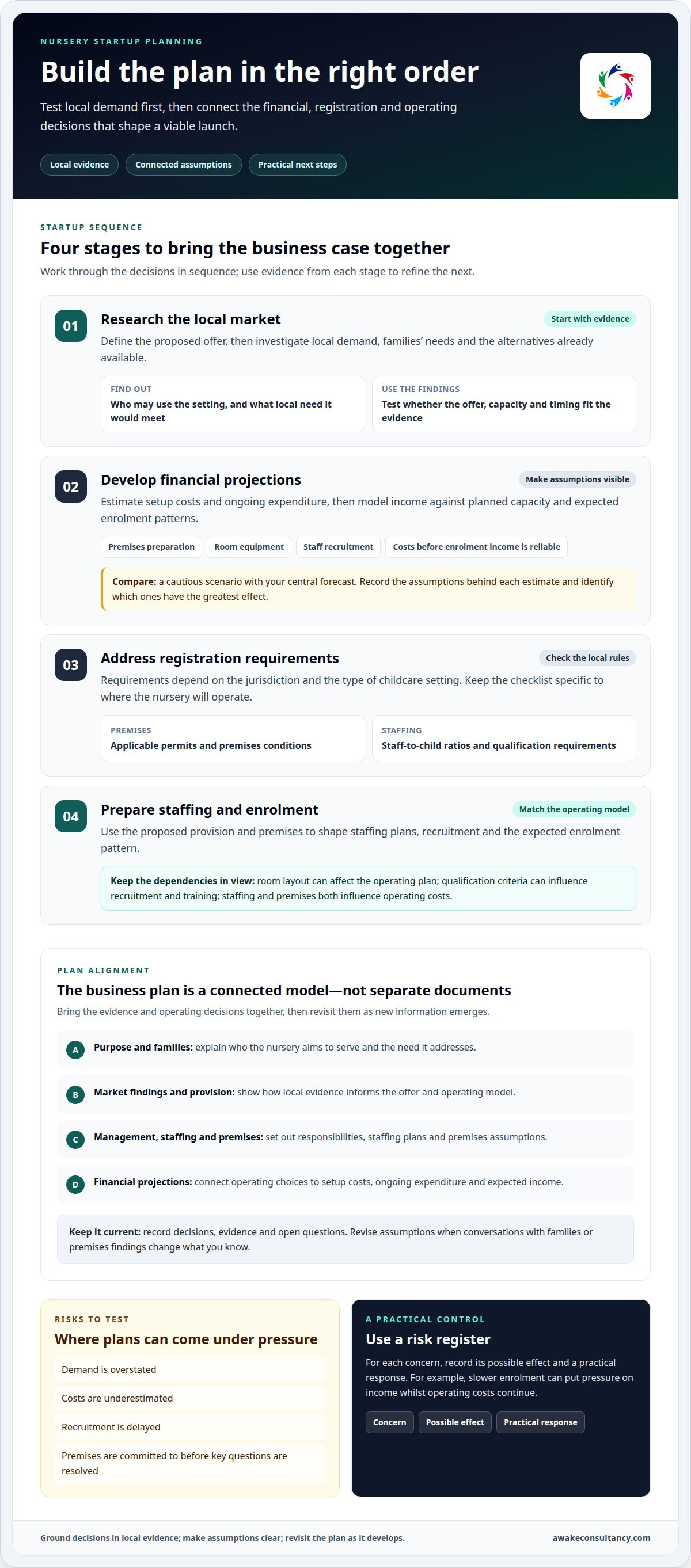
New settings face risks when demand, cash flow, staffing and operations do not align. Plan in sequence: research the market, develop projections, address registration requirements, then prepare staffing and enrolment.
Startup Costs and Financial Projections
List costs for preparing the premises, equipping rooms, recruiting staff and operating before enrolment income becomes reliable. Separate setup costs from ongoing expenditure, and record the assumptions behind each estimate. For example, show how different enrolment patterns affect income while regular costs continue. This makes the financial model easier to assess and update.
Base projections on planned capacity, expected enrolment patterns and the operating structure. Compare a cautious scenario with your central forecast, then identify which assumptions have the greatest effect. Market research should inform expected demand. If local evidence does not support the model, reconsider the offer, capacity or timing.
Business Planning
Connect the nursery’s purpose to the families it aims to serve, the need it addresses and its operating model. Include market findings, management responsibilities, staffing plans, premises assumptions and financial projections. Each part should align: the proposed provision shapes staffing, while staffing and premises influence operating costs.
Treat the plan as a working document. Record decisions, evidence and open questions, then revise it as conversations with families or findings about premises change your assumptions. A clear plan explains why the model is viable and which actions must happen before launch.
Risks and Reasons for Failure
Common risks include overstating demand, underestimating costs, delaying recruitment and committing to premises before resolving key questions. These pressures can compound: slower enrolment can reduce income while operating costs continue. Research local alternatives and speak with families to test whether the proposed service meets a genuine need.
Use a risk register to record each concern, its possible effect and a practical response. For example, if enrolment grows more slowly than expected, identify adjustable costs and ongoing commitments. Revisit the register when market evidence, staffing plans or premises assumptions change.
Opening Steps from Planning to Enrolment
Define the offer and research local demand first. Next, prepare the business plan and projections, then assess premises against the intended operation. Identify the applicable licensing process for the jurisdiction where the centre will operate. Track dependencies, since premises decisions can affect staffing and the operating model.
Then organise recruitment, prepare the setting and establish an enrolment process for families. Assign an owner to each action and record what decision or evidence will move it forward. Review progress against the plan and adjust assumptions when new information changes the sequence. A nursery startup consultancy can help turn research findings into practical launch priorities; explore support with nursery startup planning.
What services do nursery startup consultants provide?
Support can span early planning and the practical work of establishing a setting. Nursery startup consultancy can review the proposed model, identify decisions that need attention and organise actions into a workable sequence. For example, a founder considering a pre-school can examine how its intended age range, daily routines and staffing approach fit together before finalising the operating plan.
The scope should match the founder’s current stage. Someone still testing an idea may need structured questions and market analysis; someone preparing to open may need operational guidance. Define the intended outputs before sessions begin, such as a reviewed plan, a prioritised action list or documented procedures. Clear outputs help keep the work focused.
- Business planning: review the proposed service, target families, management structure and assumptions behind the operating model.
- Financial guidance: examine projected income, ongoing expenditure and the effect of enrolment patterns on cash flow.
- Operational development: map responsibilities, routines and procedures, using an example day to reveal unclear handovers.
- Recruitment planning: identify roles, responsibilities and development needs before building a staffing plan.
- Practice and quality: review how leadership expectations connect with children’s experiences and staff practice.
These areas overlap. A revised opening model may change projected expenditure, while recruitment plans affect how the service operates each day. Ask for recommendations that connect across the plan rather than treating each topic as a separate document. A simple action record can identify the decision, its owner and the evidence needed to move forward.
Some founders need focused advice on a defined issue, such as clarifying management responsibilities. Others may need support across several stages, from concept development to preparing operational systems. In either case, agree the scope, working method and deliverables at the outset. For instance, a session about staff development should produce priorities linked to the intended roles, not generic training suggestions.
Consultancy can also help leaders review practice after opening. A structured review might examine how routines work, where communication breaks down and which procedures need refinement. This goes beyond preparing polished documents: recommendations should connect written expectations with what staff do during an ordinary day. Record agreed changes and revisit them in subsequent reviews.
Choose nursery startup consultancy by matching expertise to the task. A financial planning question calls for relevant business insight, while a practice-development question needs early years understanding. Ask what the work will cover, how progress will be recorded and which decisions remain with you. The right fit is practical, specific and aligned with the nursery’s stage of development.
What business plan and financial projections are needed to open a nursery?
A strong plan links the nursery’s proposed care offer to demand, operations and financial viability. Each assumption should connect to evidence or a clear decision, so the document can guide action rather than simply describe an ambition.
Start with the service model. Specify the age groups, intended opening pattern, daily provision and families the setting aims to serve. Explain how local research supports that offer. For example, if parents express demand for particular sessions, show how the proposed timetable responds and how it affects staffing and income.
The business plan should also identify who will lead the setting, how responsibilities will be managed and what systems support day-to-day practice. Describe premises assumptions, the recruitment approach, enrolment process and operating priorities. Keep these sections connected: a longer opening day changes staffing needs, while room use affects the practical delivery of care.
Financial projections translate those decisions into a view of the nursery’s financial position. Build an assumptions sheet showing how expected enrolment, fees, staffing and operating costs shape income and expenditure. Separate setup spending from recurring costs, and include cash flow so you can see when money is expected to enter and leave the business.
- Income assumptions: show how planned places, enrolment levels and attendance patterns contribute to projected revenue.
- Staffing costs: connect roles and working patterns with the operating model, including the effect of recruitment timing.
- Premises and setup: record costs associated with preparing and equipping the proposed setting.
- Ongoing expenditure: include regular operating costs, then explain how each estimate was established.
- Cash flow: map the timing of income and payments to identify periods when available funds may tighten.
Test the model with different enrolment assumptions. For example, compare a gradual build-up with a faster one and observe how each affects cash flow, staffing and operating decisions. This is not a prediction of the exact outcome. It shows which assumptions matter most and where the plan needs flexibility.
Review projections whenever an important decision changes. Different premises, a revised timetable or a new staffing structure can alter costs and achievable income. Keep revised assumptions beside the earlier version, note the reason for each change and identify its effect on the plan. This creates a clear record for discussing decisions with business partners or funders.
Before relying on the completed plan, check that its narrative and figures agree. If the business plan describes a particular level of provision, the staffing model and projections should reflect it. A structured review can help examine these links, strengthen assumptions and identify gaps before commitments are made.
How do you find a location and meet zoning, building, and safety rules for a childcare centre?
A suitable property must work for the intended childcare operation, not simply look attractive during a viewing. Compare potential premises against local demand, access, layout and the changes needed before making a commitment.
Start with areas where your research suggests families may need the proposed service. Visit potential locations at different times, observing traffic, pedestrian access, noise and how families could arrive and leave. Consider whether the route is practical for parents carrying children or equipment, and whether arrivals could be managed without disrupting nearby businesses or residents.
For each property, identify the planning and registration processes relevant to its intended use. Requirements depend on the jurisdiction and the building’s current status. Gather existing plans and permission records from the owner, then list questions about proposed changes before agreeing to a lease or purchase. Record who needs to review each issue and when.
Walk through the rooms as if operating an ordinary day. Consider where children would play, rest and move between activities, and where staff would position themselves to supervise. Note features that could complicate routines, such as blind corners, narrow corridors or entrances shared with other occupants. These observations help assess the layout against your planned provision.
- Use and permissions: record the proposed activity, current property use and local processes that may apply.
- Condition and layout: identify repairs, alterations, access issues and practical limits on room use.
- Arrival and collection: map family access, handovers and movement around the entrance.
- Safety and supervision: assess exits, secure access, hygiene arrangements and sightlines during daily routines.
- Outdoor areas: consider access, boundaries and how the space would function for children and staff.
Ask suitable property professionals to assess technical matters, and keep their findings with the premises records. Separate essential work from changes that improve convenience, then consider how each affects the proposed operating model. A property needing substantial alterations may change the plan’s timing and financial assumptions.
Compare potential sites using the same written criteria. Record strengths, unresolved questions, likely changes and dependencies for each property. This makes trade-offs visible: a convenient location may need more adaptation, while a ready-to-use building may serve fewer families. Use the comparison to guide decisions rather than relying on first impressions.
If premises decisions are affecting your launch planning, discuss your nursery startup plans with a relevant early years adviser. A structured review can help connect property considerations with the practical needs of the setting.
Awake Early Years Consultancy: Early Years Consultancy
Awake Early Years Consultancy can help founders turn early planning into sound early years practice and operational priorities. Its Early Years Consultancy is relevant when you need to review your proposed approach, strengthen leadership or connect your plans with the realities of running a setting.
Support can also cover recruitment, Practitioner Training & Development, and Ofsted Preparation & Mock Inspections. For example, a founder preparing to open can consider how staff development and leadership expectations will support consistent practice. This complements business planning by focusing on the quality and organisation of the setting, not only its launch documents.
If you are developing a nursery plan and need practical early years guidance, contact Awake Early Years Consultancy to discuss Startup Support and the next steps for your setting.
Turn your plans into considered decisions
Opening a nursery is not a single milestone. It is a series of connected decisions that continue to shape the setting after launch. Nursery startup consultancy can help you approach those decisions with a clear view of priorities, responsibilities and the evidence behind your choices.
As your plans develop, revisit the assumptions that influence the direction of the setting. New insights about families, premises or leadership may prompt you to adjust your approach. Treat that as useful information, not a setback. Keeping decisions open to review can help you build a service grounded in children’s needs and the realities of daily practice.
When you are ready to consider your next steps, contact Awake Early Years Consultancy to discuss the support that fits your plans. A measured conversation can help you identify where focused guidance would be most useful, and move forward with greater clarity.


