

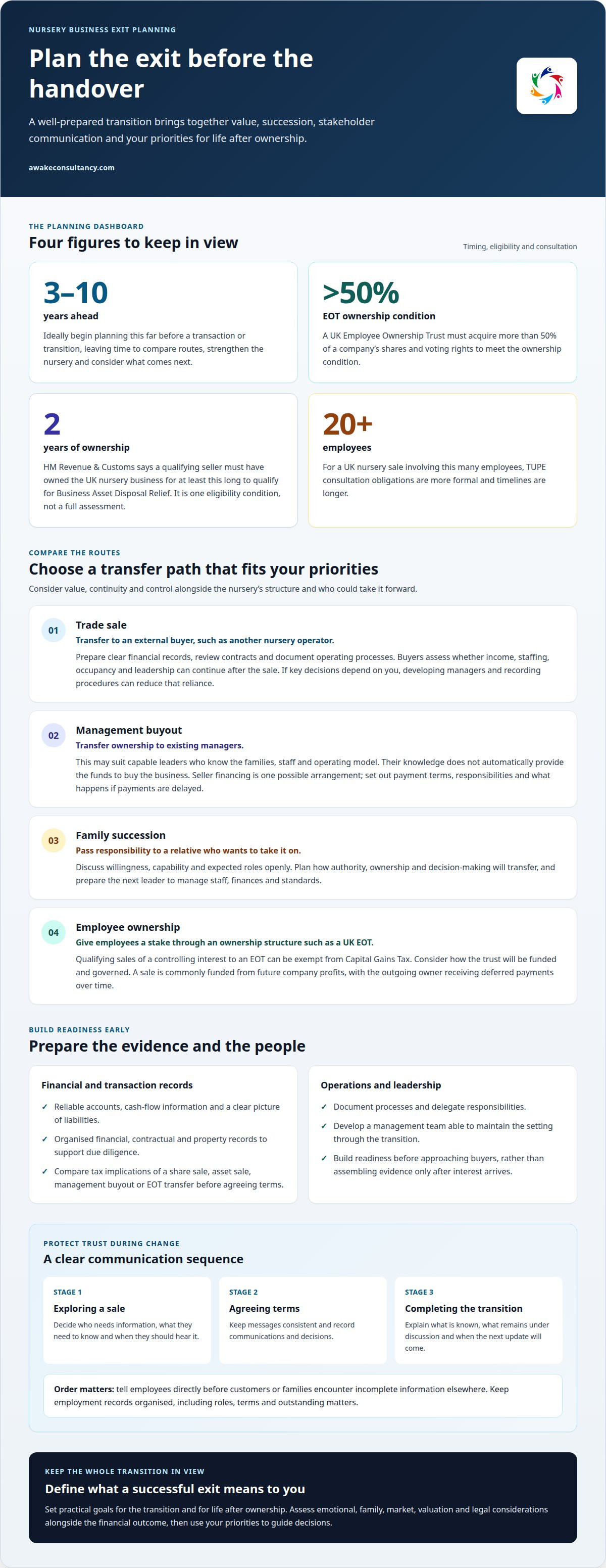
A nursery exit is shaped long before a sale or handover. Effective nursery business exit strategy planning should ideally begin three to ten years before a transaction or transition, giving you time to set goals, strengthen the business and prepare for what comes next. Your plan should bring together value, succession, communication with stakeholders and your personal priorities.
It’s natural to focus first on the likely sale price, but a sound exit involves more than a valuation. You’ll need to define what a successful departure means, prepare the nursery for transfer, communicate with employees and families, and weigh emotional, market, family and legal considerations. The sections ahead set out practical steps for making decisions in a measured order, supporting both the nursery’s continuity and your plans for life after ownership.
Key Takeaways
- Compare a trade sale, management buyout and family succession against your priorities for value, continuity and control.
- Plan stakeholder communication carefully so employees, families and customers receive clear, timely information.
- Prepare financial, contractual and property records to help demonstrate the nursery’s position and support due diligence.
- Assess emotional, family, market, valuation and legal considerations alongside the financial outcome.
- Set practical goals for the transition and for your own life after ownership, then use them to guide decisions.
1. What is an exit strategy?
An exit strategy sets out how you’ll transfer or close your nursery, what you want from the transition and how you’ll prepare. Ideally, begin planning three to ten years before a transaction or handover. This gives you time to compare routes, improve the business and consider your next chapter. The right route depends on your priorities, the nursery’s structure and who could take it forward.
A trade sale transfers the business to an external buyer, such as another nursery operator. Before marketing it, assemble clear financial records, review contracts and document operational processes. Buyers assess whether income, staffing, occupancy and leadership arrangements can continue after the sale. For example, if you make every key decision, developing managers and recording procedures can reduce reliance on you.
A management buyout transfers ownership to existing managers. It may suit a nursery with capable leaders who understand its families, staff and operating model. However, the management team’s knowledge does not automatically provide the funds to buy the business. Seller financing is one possible arrangement, allowing an internal buyer to pay over time. The agreement should set out payment terms, responsibilities and what happens if payments are delayed.
Family succession can preserve continuity when a relative wants to take responsibility. Start with an open conversation about willingness, capability and the role each family member expects to hold. Then plan how authority, ownership and decision-making will transfer. A relative’s personal connection to the nursery is no substitute for preparing them to lead staff, manage finances and maintain standards.
Employee ownership offers another route. A UK Employee Ownership Trust must acquire more than 50% of a company’s shares and voting rights to meet the ownership condition. Qualifying sales of a controlling interest to an EOT can be exempt from Capital Gains Tax. This structure can support employee involvement, but the trust’s funding and governance need careful consideration.
Financial preparation starts with reliable accounts, cash-flow information and a clear picture of liabilities. Operational preparation includes documented processes, delegated responsibilities and a management team able to maintain the setting through the transition. Build readiness before approaching buyers, rather than assembling evidence only after interest arrives.
Tax treatment can vary with the sale structure, so compare the implications of a share sale, asset sale, management buyout or EOT transfer before agreeing terms. HM Revenue & Customs says a qualifying seller must have owned the UK nursery business for at least two years to qualify for Business Asset Disposal Relief. Treat that ownership period as one eligibility condition to discuss with a tax adviser, not as a complete assessment of relief.
2. Communicating with stakeholders, employees, and customers
Clear communication helps protect trust during a nursery sale or change of control. Decide who needs information, what they need to know and when they should hear it. Plan communications around key stages, such as exploring a sale, agreeing terms and completing the transition. Keep a written record of messages and decisions so employees receive consistent information, not conflicting updates through informal conversations.
For a UK nursery sale involving 20 or more employees, TUPE consultation obligations are more formal and timelines are longer. The Transfer of Undertakings (Protection of Employment) Regulations governing employee transfers are from 2006. Plan for consultation as part of the transaction timetable, and prepare accurate employee liability information for the relevant review. Keep employment records organised, including roles, terms and outstanding matters, so the information provided reflects the nursery’s actual position.
Timing matters. Employees should hear about a proposed change directly from you before customers or families encounter incomplete information elsewhere. Explain what is known, what remains under discussion and when the next update will come. If a merger changes reporting lines or daily procedures, show staff how those changes affect their roles. Avoid promising that nothing will change while operational details are still being agreed.
An Employee Ownership Trust can provide a route for employees to gain a stake in the nursery. The purchase is commonly funded from future company profits, with the outgoing owner receiving deferred payments over time. Explain how the trust would be funded, how employees would participate and how leadership decisions would work after the sale. Staff need a practical explanation of the arrangement, not just a description of its ownership structure.
Employee rewards should support clarity, not replace it. One business owner gave each employee who stayed through liquidation a one-month bonus and reported that staff were informed openly and chose to remain. The example highlights the value of explaining a reward’s reason, eligibility and timing before staff make decisions. Consider any arrangement alongside the transaction’s financial position and employment terms.
Employee stock ownership plans, or ESOPs, are an employee-ownership concept distinct from the UK EOT structure. In a merger, explain whether employees receive shares, trust participation or another arrangement, and how the new organisation will handle responsibilities. Do not assume the label alone tells staff what will change for them. A simple written summary can set out ownership, decision-making and the date of the next update.
Families and customers also need information that reflects their relationship with the nursery. Tell families how to raise practical questions, and give customers clear details about any changes to contacts or routines. For a structured review of the financial implications behind a transition, nursery business and financial support can help owners assess the decisions involved.
3. What Is Nursery Business Exit Planning?
Nursery business exit planning turns a possible sale into a managed process. It brings together personal goals, financial evidence, operational readiness and reviews of contracts and property. Start by setting a preferred transition, reviewing records and identifying the information a buyer will need. The aim is to present a clear, supportable picture of the nursery, not simply an asking price.
Financial due diligence starts with accounts and cash-flow records showing income, costs, debts and profitability. Buyers scrutinise UK nursery cash flow covering at least three years. Prepare reconciliations explaining unusual movements, outstanding payments and owner-related costs. Compare forecasts with actual performance, then record the assumptions behind expected occupancy, staffing and expenditure. This makes the figures easier to understand and gives both sides a basis for discussing future performance.
Operational and regulatory readiness should be evidenced in the documents a buyer reviews. Organise key contracts, employment records, policies, inspection information and records relating to the setting. For a UK nursery share purchase, the seller and buyer must notify Ofsted of the ownership change within 14 days of completion. For an asset purchase, the buyer must obtain new Ofsted registration approval before completion and before operating under the buyer’s name. These distinct steps make sale structure important to planning.
A nursery sale agreement should clearly describe what is being transferred, the payment arrangements, completion conditions and each party’s responsibilities. It should also address included assets, assumed liabilities, warranties and how unresolved matters will be handled. Align the agreement with due diligence findings so its terms reflect the business and transaction.
Property checks depend on whether the nursery occupies freehold premises or leases its site. A lease with 15 or more years remaining supports a financeable transaction for most UK lenders; ten years is the lower lease-term threshold most lenders accept. Fewer than five years remaining restricts the transaction to cash buyers. Review the lease, repair obligations, permitted use and any required landlord consent as part of property due diligence.
Location, real estate, inventory and seasonality can all affect a nursery’s appeal and cash flow. The site’s accessibility and property arrangements shape buyer interest, while seasonal occupancy and staffing patterns influence trading records. Prepare an inventory schedule distinguishing usable assets from items needing replacement, and explain seasonal changes in income or costs. For example, a cash-flow forecast should show how quieter periods affect working capital.
Set personal and financial exit goals before assessing offers. Consider the income you’ll need after ownership, your preferred handover role and whether you want the nursery to retain its identity. A forecast should connect those goals to sale proceeds, continuing commitments and payment timing. This helps you judge proposals on overall fit, not headline value alone.
4. Emotional, market, family, valuation, and legal challenges
Selling a nursery can be difficult because the business may shape an owner’s identity and daily routine. The Exit Planning Institute reports that around 75% of surveyed business owners profoundly regret their exit. Treat that finding as a prompt to plan beyond the transaction: identify what work, relationships or interests will give your time structure afterwards. A clear personal plan can help separate emotional readiness from the practical decision to sell.
Family expectations can complicate a valuation or delay a decision. One relative may expect succession, while another prefers a third-party sale and a clean break. Meet to discuss each person’s preferred role, financial expectations and concerns before sharing confidential sale information. Record agreed principles and revisit them when offers arrive. This gives you a basis for difficult conversations and helps distinguish family preferences from the nursery’s commercial position.
Market conditions affect buyer interest, but a listing alone does not establish value. A typical UK childcare-sector nursery valuation range is 3x to 6x EBITDA. The multiple applied depends on factors such as profitability, occupancy, management depth, premises and the quality of financial records. Compare the valuation with the owner’s goals and the evidence behind the profit figure. A strong headline estimate carries little weight if buyers cannot understand how the business earns it.
Testing the market with a business listing can reveal whether the nursery attracts serious interest, but prepare before publishing. First define your objective: seek a buyer, assess likely interest or compare possible transaction structures. Then decide what the listing should disclose. An anonymised profile can describe the setting’s size, location characteristics, operating strengths and broad financial position without immediately identifying the nursery. Keep sensitive documents for later discussions with suitable prospects.
Different buyers value different features. A nursery group may focus on integration and local coverage, while a management team may prioritise continuity and its ability to lead. A family buyer may place greater weight on preserving the setting’s identity. Tailor marketing materials to the intended buyer type while presenting consistent financial facts to everyone. Use a confidentiality agreement before sharing detailed accounts, staff information or commercially sensitive records.
Manage legal and confidentiality risks throughout the marketing process. Agree who can approach prospective buyers, how enquiries will be logged and which documents can be shared at each stage. For example, provide a summary first, then release detailed information after assessing an interested party. Set a clear process for handling staff or family questions if sale discussions become visible. A considered approach helps protect trust while allowing you to test genuine interest.
5. Business exit strategy definition and goals
A business exit strategy defines how ownership will change and what you want that change to achieve. Your goals as a nursery owner should cover both the business and life after it. Start by writing down your preferred outcome, then identify decisions that could support or obstruct it. For example, a handover designed to protect continuity may require different choices from a sale focused on a clean break.
Set goals across distinct areas instead of treating the sale price as the only measure of success. Consider the financial outcome, the setting’s future, your role during the transition and the timing that suits your circumstances. Family succession may prioritise continuity, while a sale to another operator may place more weight on terms and handover. Naming these priorities helps you compare proposals consistently.
Retirement planning should connect the proceeds you expect with your future income and commitments. A nursery business plan can include supplementing the owner’s retirement as a business goal. Estimate your personal income needs, consider assets outside the nursery and record assumptions that affect your decision. This helps distinguish the amount needed for a viable next stage from an ideal figure that may not align with the business.
Operational goals can make the nursery less dependent on you. Identify decisions that currently rely on your personal knowledge, then document processes and delegate appropriate responsibilities. For example, if you approve every staff rota or supplier order, establish a clear approval process and prepare a colleague to manage it. This can strengthen the business and give you a realistic view of how a transition might work.
Some concerns are personal, not financial. You may worry about losing daily purpose, relationships with families or a role in the early-years sector. Plan for that change while you’re still involved in the nursery. Identify one or two activities that could provide grounding after exit, such as mentoring, volunteering or teaching. A considered next-step plan gives retirement and succession decisions a practical personal context.
Turn each goal into a decision test. If continuity matters most, ask whether a buyer’s proposed leadership and operating arrangements support it. If financial security comes first, compare the proposed payment structure with your income plan and continuing obligations. If you prefer family succession, discuss responsibilities and decision-making with relatives before a formal handover. These tests help you recognise trade-offs instead of relying on instinct alone.
Review the goals when circumstances change, such as a shift in family plans, leadership capacity or the nursery’s performance. Keep a written record of priorities and the reasons behind them, then use it when considering offers or adjusting the transition plan. To examine how financial goals connect with the nursery’s position, discuss your nursery’s financial exit planning.
Awake Early Years Consultancy: Early Years Consultancy
Awake Early Years Consultancy can help nursery owners strengthen the operational foundations of a well-managed transition. Use Early Years Consultancy to review practice, leadership or the consistency of day-to-day provision before a handover. Practitioner Training & Development can build staff capability, while Recruitment Support can assist with workforce planning. Ofsted Preparation & Mock Inspections can help you assess readiness and identify areas needing attention.
These services support the nursery’s operational position; they do not replace legal, tax or transaction advice. Owners can use them to address practice and leadership priorities alongside their wider exit preparations. For a practical discussion about your setting’s needs, contact Awake Early Years Consultancy.
Make your next decision deliberate
Give your exit plans a practical next step by creating a short decision record for the choices ahead. Note what matters most, what evidence would help you decide and who will take each action. Revisit the record when circumstances change, so your decisions stay connected to the nursery’s current position and your priorities.
Treat nursery business exit strategy planning as an ongoing part of leadership, not a document to leave untouched until a sale is near. Regular review can help you recognise when assumptions have shifted and where further discussion is needed. You don’t need to resolve every issue at once. Start with the decision that would make the next one clearer.
If you would value an early-years perspective as you consider your next step, start a conversation with Awake Early Years Consultancy. A considered plan can help you move forward with greater purpose and confidence.
Frequently Asked Questions
What Is Nursery Business Exit Planning?
It means preparing the nursery, its leadership and its owner for a change in ownership. Start by identifying decisions that depend on you, such as approving expenditure or handling parent concerns. Then decide who could take on those responsibilities and what records or training they would need. This practical exercise can reveal where continuity depends on people, procedures or knowledge held by only one person.
What is an exit strategy?
An exit strategy is the route you choose out of the business, along with the conditions that would make it acceptable. For example, you might prioritise preserving the nursery’s ethos, reducing your ongoing role or securing a particular form of payment. Write down which aims are essential and which are flexible. That distinction can guide negotiations when an offer meets some priorities but conflicts with others.
When Is the Right Time to Start Planning?
Start when a change in ownership becomes a realistic possibility, not only after you decide to sell. Changes in health, family plans, leadership capacity or motivation can alter what you want. Use a quiet trading period to review goals and identify dependencies without the pressure of active negotiations. If a potential successor is already involved, discuss their development needs before a handover becomes urgent.
What Role Do Advisors Play in Successful Exit Planning?
Advisers help you examine different parts of the decision with suitable expertise. An accountant can organise financial information and model how proposed payment terms affect cash flow. A solicitor can explain contract wording and transaction responsibilities, while a tax adviser can assess the implications of the chosen structure. An early-years specialist can help you consider how leadership, practice and staffing arrangements may affect continuity after the transfer.
What are the Real Business Costs of Not Planning?
Without preparation, you may spend time answering avoidable buyer questions instead of managing the nursery. Incomplete records can make unusual expenditure harder to explain, while unclear responsibilities can leave staff uncertain about decisions. For example, if only you know how supplier agreements are managed, a buyer may need more evidence to assess continuity. The practical cost is less choice and reduced control over timing and negotiations.
What’s Next?
Choose one unresolved decision and make it actionable. If you haven’t settled on a preferred successor, list who could realistically lead the nursery and what each option would require. If your main concern is personal finances, record the information needed to test your assumptions. Assign each action an owner and a review point, then use the findings to refine your wider transition plan.
When Do I Sell My Business?
Consider selling when the timing supports both your personal aims and the nursery’s position. Review whether leadership can maintain daily operations without your constant involvement, whether records explain performance clearly and whether the proposed terms fit your plans for the next stage. A strong offer alone may not resolve concerns about family expectations or the handover. Compare the full terms with your priorities before deciding whether to proceed.
What are the exit strategy options for a nursery business owner?
Common routes include selling to another operator, transferring ownership to managers, passing the business to family or moving towards employee ownership through an Employee Ownership Trust. Each route has different implications for control, continuity and how you’ll be paid. Compare who will lead the nursery afterwards, how they’ll fund the purchase and what role, if any, you want during the handover.


